Hidden Histories: The Story of the Chest of Drawers
At first glance, the modern chest of drawers is one of the most ordinary of household items - practical, unloved, often tucked against a wall and quietly doing its duty. Yet within those sliding compartments lies a surprisingly rich history of design, craftsmanship, and daily life.
From Chest to Drawers
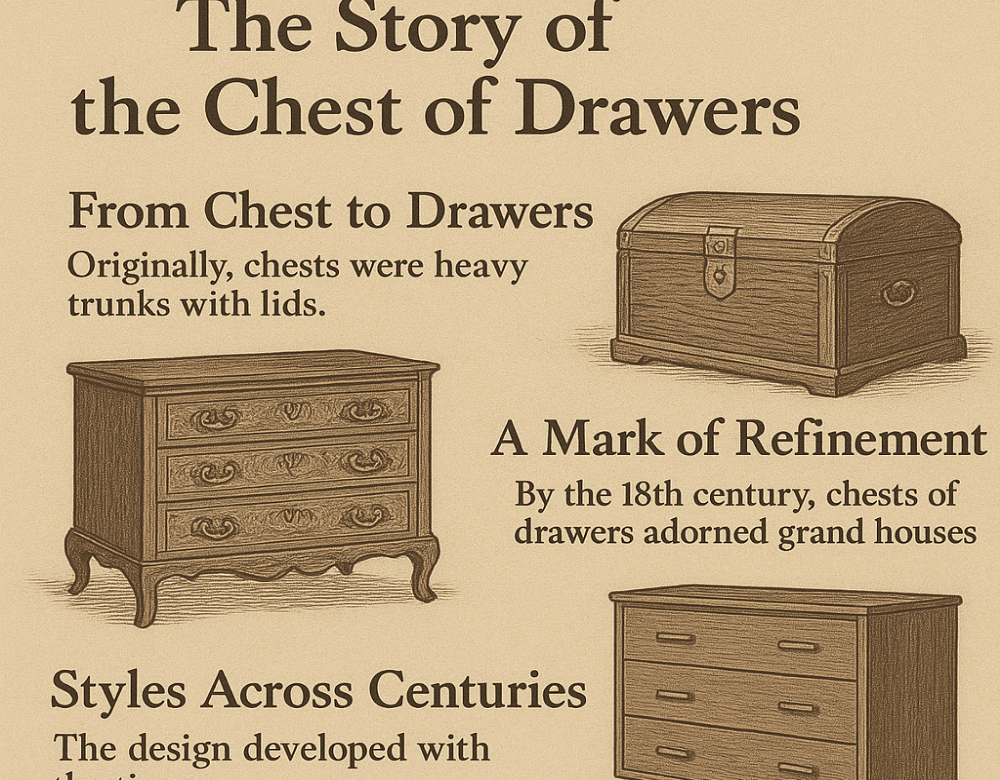
The chest of drawers began, quite simply, as a chest. In medieval homes, people stored clothing, linens, and valuables in heavy wooden trunks. They were secure, but impractical for everyday use - every time you needed a shirt, you had to rummage through layers of folded fabric.
The breakthrough came in the 17th century: instead of lifting a lid, why not pull out a drawer? Cabinet-makers began stacking drawers in frames, and suddenly, storage was easier, tidier, and more elegant. The chest of drawers was born.
A Mark of Refinement
By the 18th century, chests of drawers were found in grand houses as well as modest homes. In England and France, they became canvases for craftsmanship. Veneers of walnut, mahogany, or satinwood were inlaid with marquetry, while brass handles and escutcheons gleamed. These weren’t just storage solutions - they were status symbols, showing wealth and taste.
In smaller cottages, plainer pine and oak versions did the same job, but the principle was unchanged: drawers meant order and convenience.
Styles Across Centuries
The chest of drawers adapted to fashion. The Georgian period favoured symmetry and clean lines. The Victorians loved ornament and carving. By the 20th century, modernism pared them back to sleek forms in oak, teak, or steel. Scandinavian designers elevated the chest of drawers into something light, airy, and functional, perfectly at home in the pared-down interiors more common since.
Everyday Stories
Despite the stylistic shifts, the chest of drawers has always been intimate furniture. It holds our clothes, our jewellery, sometimes our secrets. Many families pass them down through generations, drawers still lined with old paper or faint traces of lavender. To open a drawer is often to open a memory: a ticket stub, a photograph, a forgotten scarf.
More Than Storage
Today, whether painted in cheerful colours, polished to a shine, or left raw and rustic, the chest of drawers remains a staple of the home. It is furniture that works hard but also speaks quietly of continuity. From noble mansions to student flats, it stands as one of the most enduring designs in domestic life.
So next time you open a drawer to fetch your socks, remember: you are using a piece of history, perfected over centuries, and still as essential as ever.